
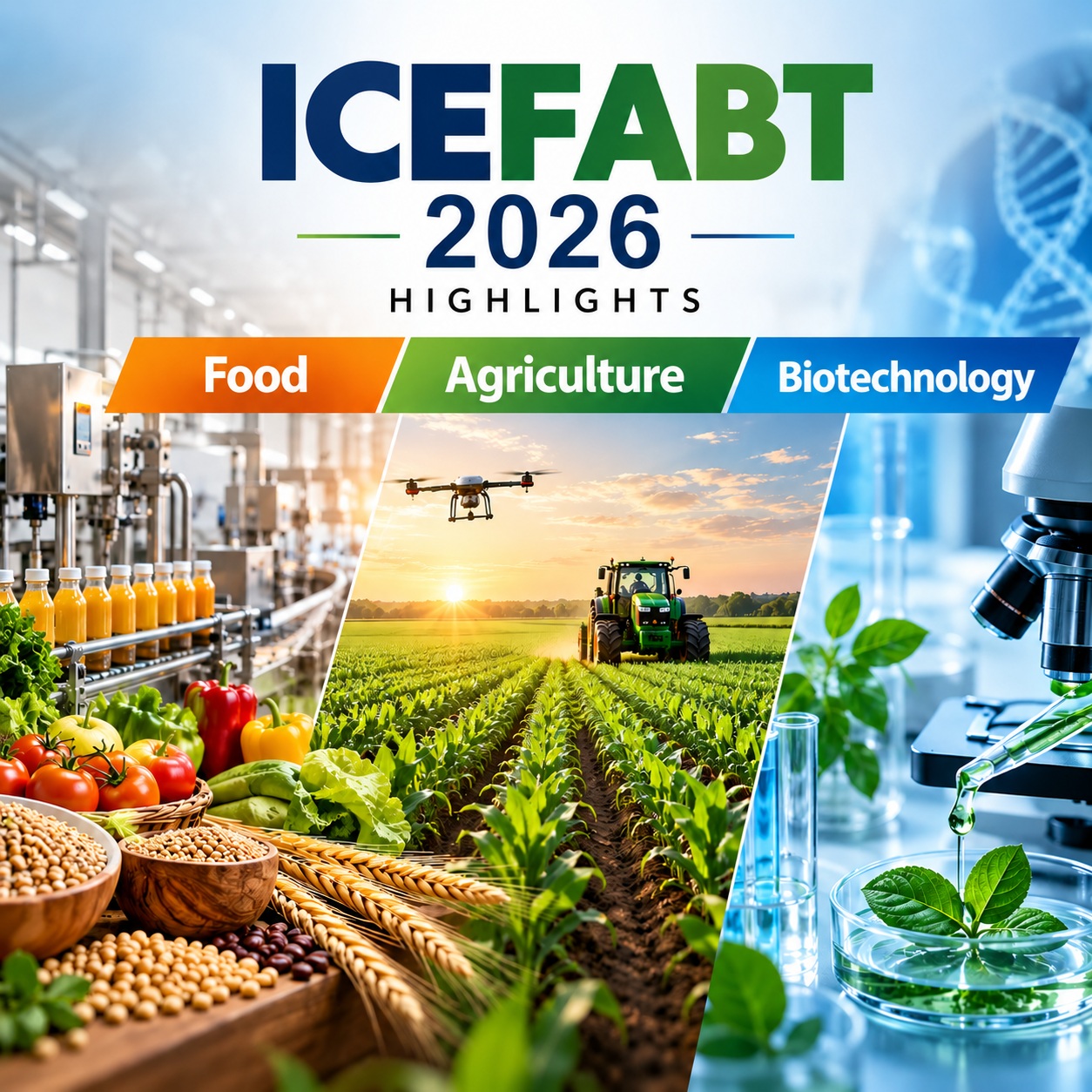
The International Conference on Environmental, Food, Agriculture and Bio-Technology (ICEFABT) will be held on 11 October 2026 in Bengaluru, India, bringing researchers, academics, scientists and professionals together to discuss developments across environmental science, food technology, agriculture and biotechnology.
Organised by the International Research Forum for Engineers and Researchers (IRF Conference), the event is intended to provide a platform for sharing research, ideas and knowledge on emerging technologies and interdisciplinary developments in these fields.
Conference to Focus on Emerging Research Areas
ICEFABT 2026 is designed for participants working across environmental, food, agriculture and biotechnology-related disciplines. The conference encourages research papers based on theoretical, quantitative, qualitative and mixed-method approaches, as well as studies that combine multiple disciplines.
The organisers position the conference as a forum for researchers to exchange findings and discuss technologies and approaches addressing current challenges in environmental management, food systems, agricultural development and biotechnology.
The conference also provides opportunities for participants to interact with researchers from different academic and professional backgrounds. Such cross-disciplinary engagement can help connect developments in scientific research with practical applications across related sectors.
Paper Submission and Participation
Researchers interested in presenting their work were invited to submit papers for consideration. According to the conference information, participants could submit papers through the designated submission channel or contact the organisers through email.
The paper submission deadline was 21 September 2026, while the last date for registration was 26 September 2026. The conference itself is scheduled for 11 October 2026 in Bengaluru.
The official language of the conference is English.
The organisers stated that acceptance or rejection notifications would generally be communicated within four working days of paper submission. Authors who did not receive a response were advised to contact the conference team using their submitted paper code.
Publication and Research Recognition
Publication opportunities form another component of ICEFABT 2026. The conference states that it is associated with UGC Care-listed and Scopus-indexed international journals.
The organisers also state that each accepted paper will be assigned an online DOI registered through Crossref. A Digital Object Identifier provides a persistent reference for published research and can support long-term accessibility and citation of academic papers.
Participants will also receive Continuing Professional Development (CPD) hours, adding a professional-development component to conference participation.
Researchers should review the conference’s publication and journal-specific terms carefully, including the exact journal, indexing status, publication conditions and any additional requirements applicable to accepted papers.
Connecting Research With Sustainable Development
ICEFABT also highlights the role of research in supporting the United Nations Sustainable Development Goals (SDGs). Environmental protection, sustainable agriculture, food systems, resource management and biotechnology are closely connected with several global sustainability priorities.
By bringing these areas together under one conference, the event aims to encourage discussion around research that can contribute to responsible resource use, sustainable production and technological development.
The interdisciplinary format is particularly relevant as challenges related to food security, environmental sustainability and agricultural productivity increasingly overlap. Biotechnology and emerging scientific methods can also contribute to research and applications across these areas.
Bengaluru Conference Provides Research Exchange Platform
The 11 October 2026 event in Bengaluru will provide researchers with an opportunity to present their work and engage with participants from different disciplines. Bengaluru’s position as a major centre for technology, research and academic activity also provides a relevant setting for a conference covering science and emerging technologies.
With the paper submission and registration deadlines having passed, the focus now shifts towards the scheduled conference date. ICEFABT 2026 is expected to bring together participants interested in environmental science, food technology, agriculture and biotechnology for research presentations, academic interaction and knowledge exchange.
ICEFABT 2026 is therefore positioned as a multidisciplinary research conference covering environmental, food, agriculture and biotechnology themes, with paper presentations, academic interaction, publication opportunities and professional-development benefits forming key components of the event.